Safety Features
Spin Robotics Safety Shield
The SD/SDV-Series screwdriver tool is designed such that the screw and bit are covered by the Spin Robotics safety shield during operation.
This reduces the risk of contact with rotating or sharp elements.
The maximum screw length within the safety shield is 35 mm — see the tool datasheet. The screw length is configured where the screw is picked up: on the Screw Feeder for Universal Robots, and on the Load Screw command for Kassow Robots.
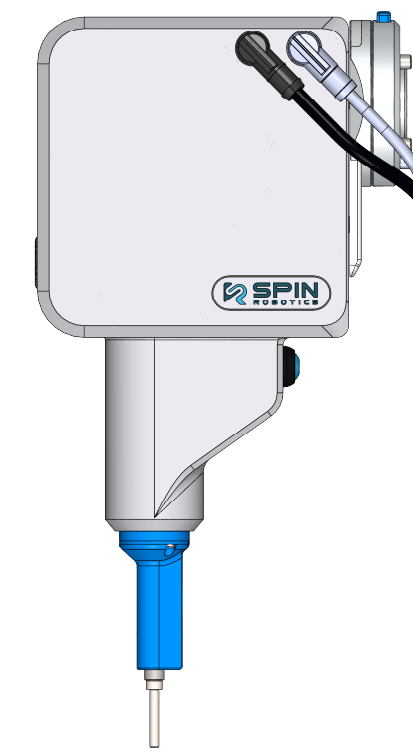
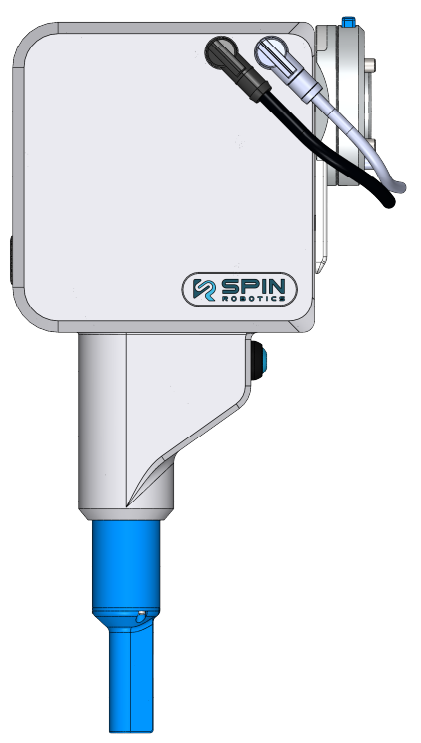
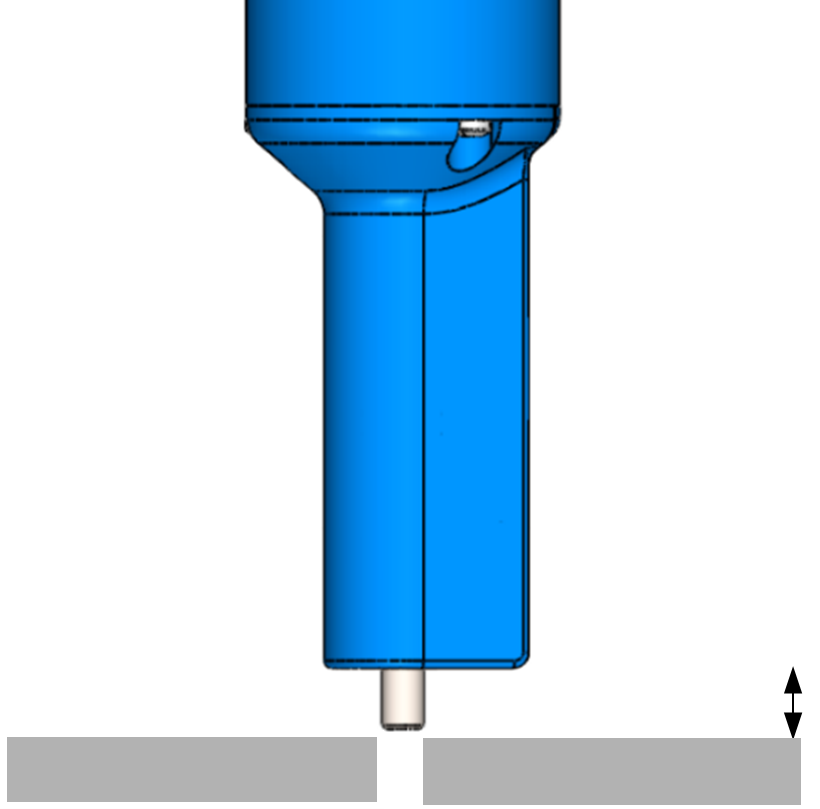
The safety shield retracts at approximately 6 mm above the surface during screw insertion.
Since fingers and hands are typically thicker than 6 mm, this reduces the risk of crushing injuries during normal operation.
Warning
The safety shield retraction distance (S1) shall NOT exceed 6 mm. Increasing this distance may introduce a crushing hazard.
48 V Motor Supply
The SD/SDV-Series tool is powered by a 48 V motor supply routed through the Spin Bridge.
On delivery, the 48 V circuit is closed by a factory-installed jumper on the front of the Spin Bridge.
This connection point allows integration of an external safety device, such as a safety relay.
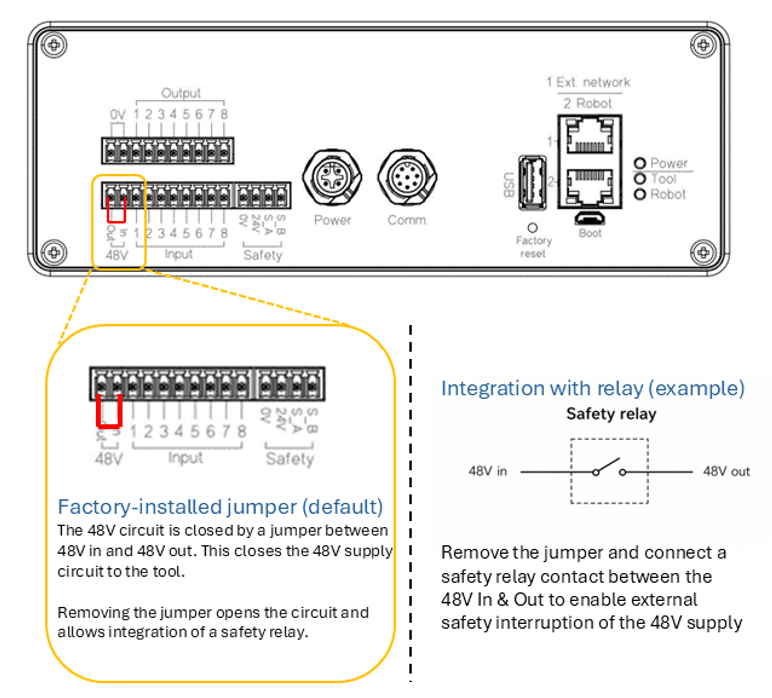
Factory-installed jumper and example of safety relay integration for interruption of the 48 V motor supply.
When using robot-integrated control (e.g., URCap or Kassow CBun), the Spin Bridge automatically disables the 48 V supply in case of an emergency stop.
When using I/O control, the integrator shall ensure that the 48 V motor supply is disabled when an emergency stop is triggered.
By replacing the jumper with a safety relay contact, the 48 V supply can be interrupted as part of the safety system.
Warning
The 48 V motor shutdown via robot-integrated control is not a safety-rated function, and failure to remove motor power during an emergency stop may result in unsafe behavior. Where a higher level of safety is required, interrupt the 48 V supply with a safety relay; the risk assessment determines whether this is necessary. If the relay is used, the integrator must implement and validate it and its wiring in accordance with applicable safety standards.
See Other Robots (I/O) for details on I/O control.
Safety Sensor
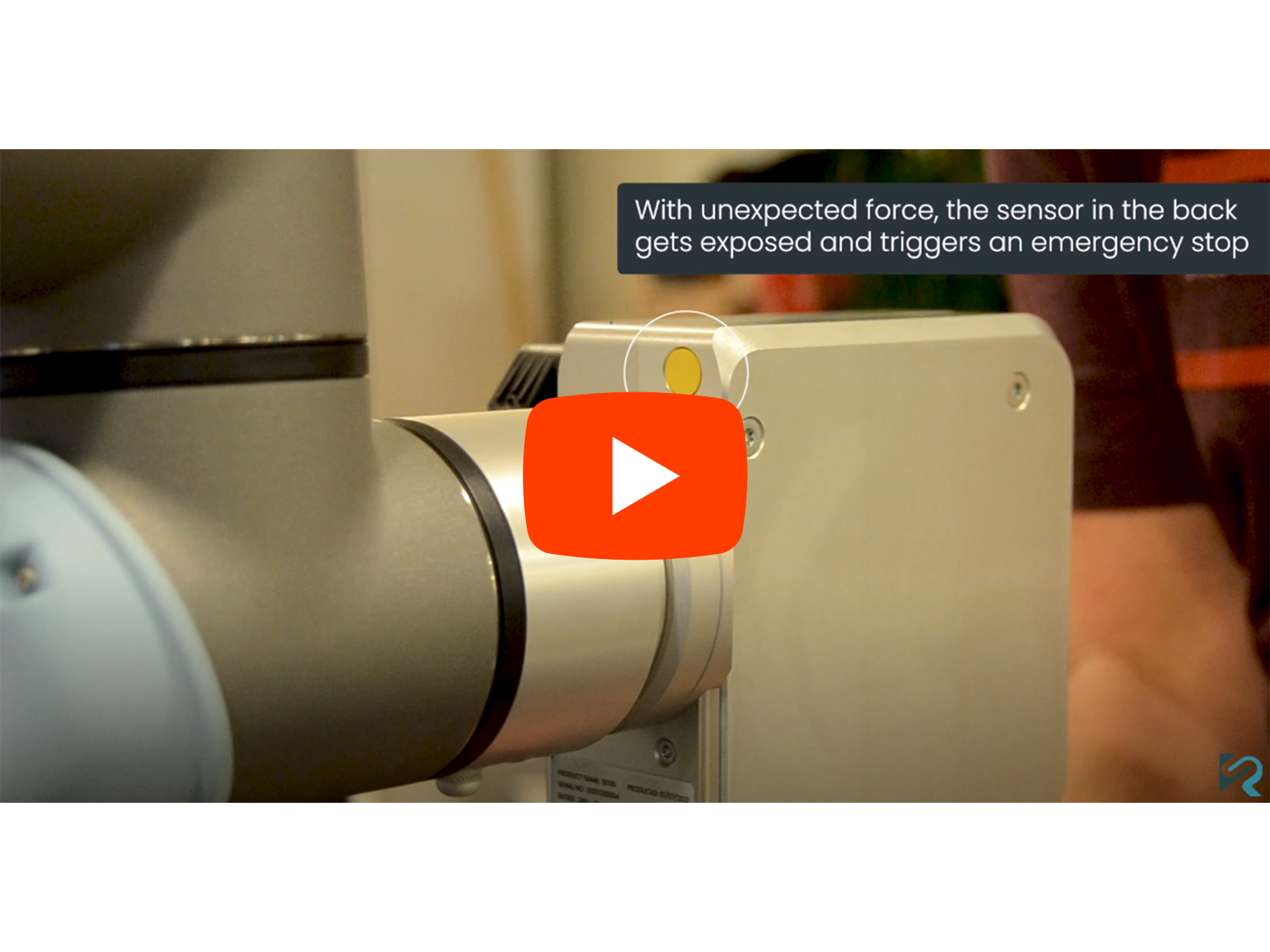
The SD/SDV-Series includes a built-in safety sensor with Performance Level D.
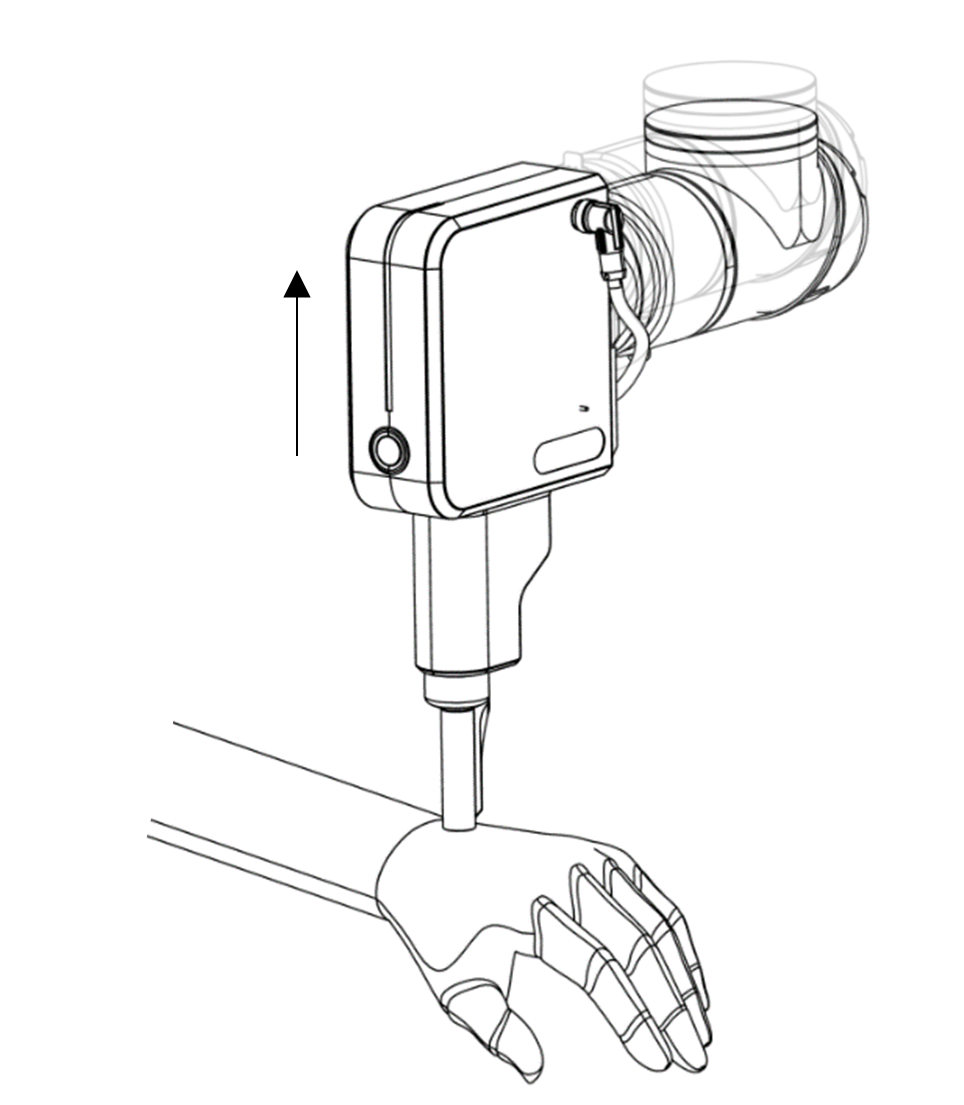
The sensor detects unexpected contact forces in the vertical direction.
Trigger threshold: ≥ 45 N
Activation: during approach to screw position
The safety system is based on a mechanical compliance mechanism:
The tool is mounted on a linear rail system
External force causes the tool to move upward
If displacement exceeds 10 mm:
Robot motion is stopped
Tool operation is disabled
The safety sensor works only as part of the overall safety chain, so the safety cable between the Spin Bridge and the robot controller must be connected — see Connect the Safety Signal.
Programming Safe Robot Trajectories
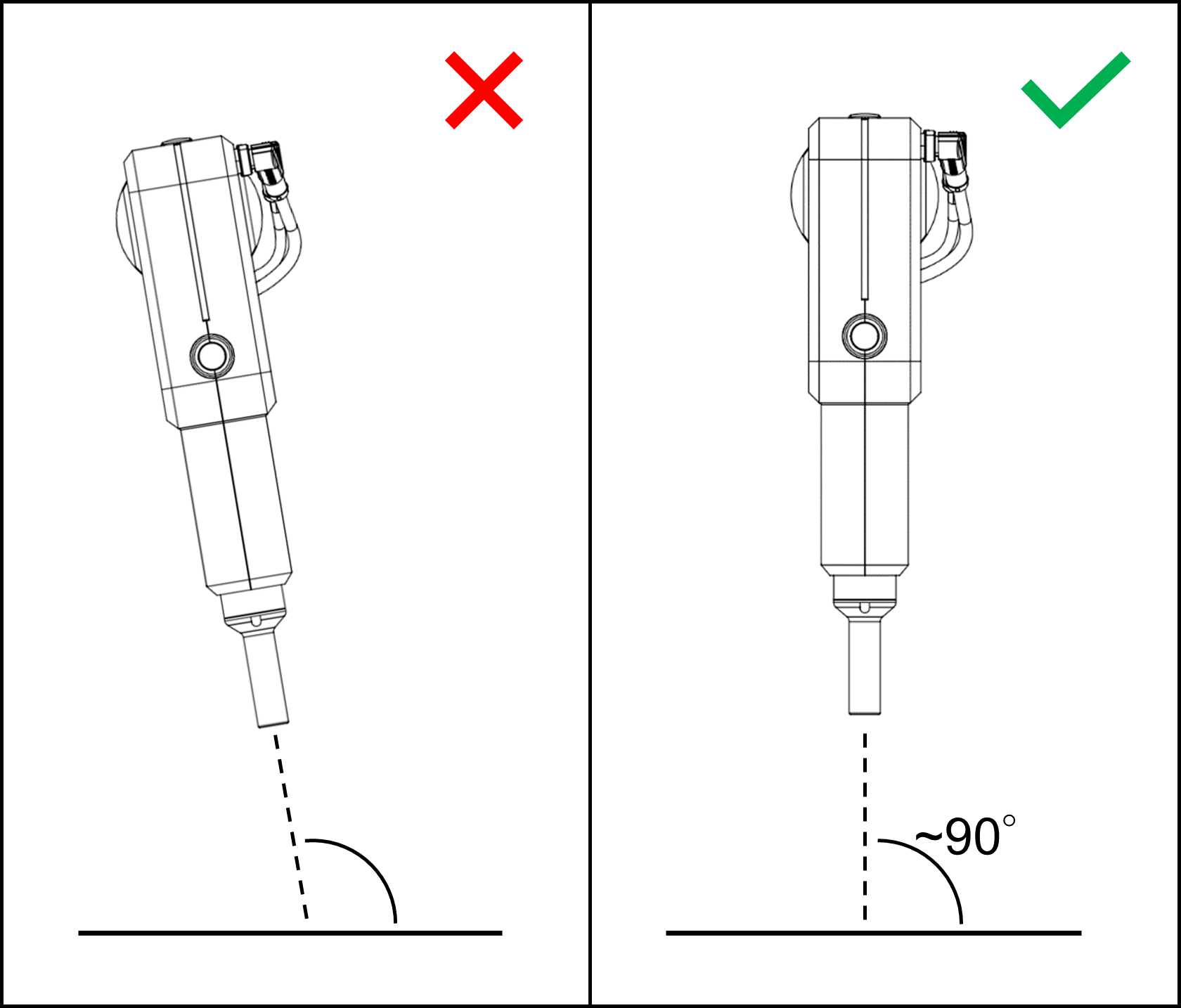
To reduce impact forces during potential contact, robot trajectories shall be programmed to approach the screw position perpendicularly (90°).
This ensures:
Maximum contact area of the safety shield
Reduced pressure and peak forces
Improved compliance with safety limits
Warning
Safe trajectory planning is essential to comply with force limits defined in ISO 10218-2:2025 and ISO/TS 15066. Improper approach angles may increase local pressure and injury risk. Approach the screw position perpendicularly (90°).
Robot motion is programmed in Programming the Robot.